


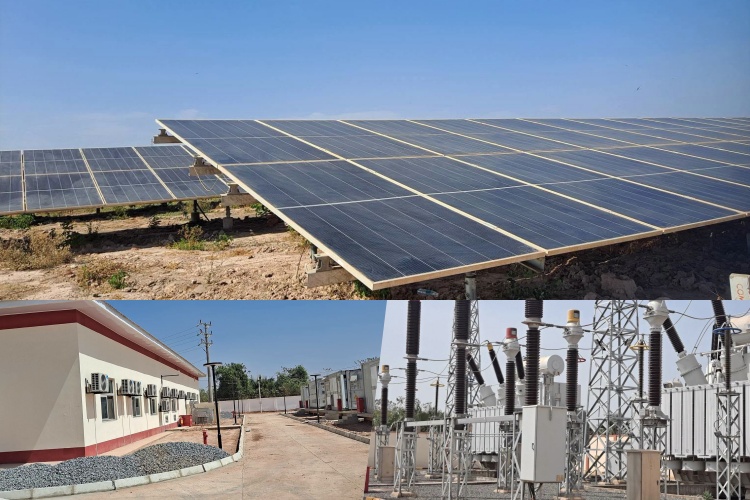
Gambiaj.com – (BANJUL, THE GAMBIA) – The Gambian government has signed agreements for the development of a 52-megawatt solar power plant equipped with a battery storage system in Soma, Lower River Region, in a move aimed at strengthening the country’s electricity supply and reducing reliance on conventional energy sources.
The project will comprise a 52 MWp Solar Photovoltaic (PV) facility and a 40.9-megawatt-hour Battery Energy Storage System (BESS). The agreements, signed on Wednesday, November 18, involve the National Water and Electricity Company (NAWEC) and the AEE and HGR Consortium, under an Independent Power Producer (IPP) arrangement.
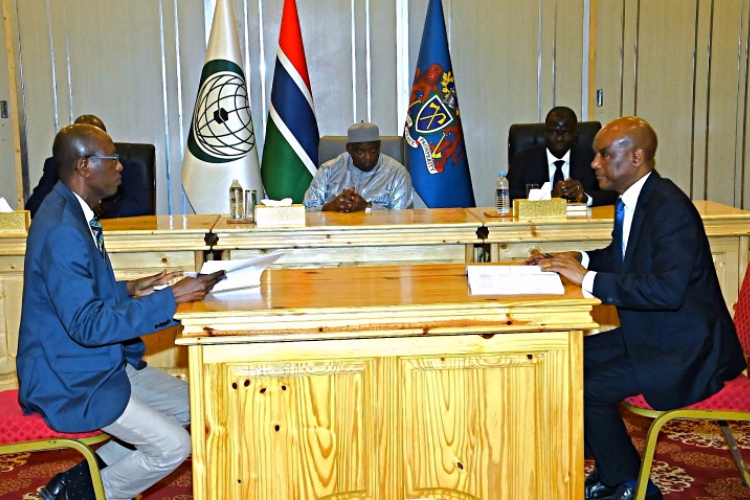
The agreements include a Power Purchase Agreement between NAWEC and the consortium, and an Implementation Agreement between the government and the private-sector partners.
Speaking at the signing ceremony, the Minister of Petroleum, Energy and Mines described the project as a major milestone in the country’s efforts to improve energy security, make electricity more affordable and accelerate the transition to renewable energy.
Battery Storage To Support Evening Demand
The choice of Soma is considered strategic because of its proximity to the 225 kV OMVG electricity substation, which will enable power generated at the facility to be fed directly into the national transmission network.
The battery storage component is expected to address one of the main challenges associated with solar energy generation: its intermittent nature. It will store excess electricity generated during daylight hours for use during periods of high demand, particularly in the evening.
According to the ministry, this is expected to improve grid stability and reduce electricity supply disruptions affecting households, schools, healthcare facilities and businesses.
The minister also said the signing of the agreements demonstrated growing investor confidence in The Gambia’s regulatory framework and economic environment.
He acknowledged the support of the World Bank Group and other development partners, as well as the contributions of the Ministry of Finance and Economic Affairs, NAWEC, the Ministry of Justice, transaction advisers and the consortium in finalizing the agreements.
Jobs And Skills Transfer Expected
Beyond increasing the country’s renewable energy capacity, the project is expected to generate employment opportunities, promote skills development and facilitate the transfer of technology to Gambian professionals.
It is also expected to stimulate economic activity in the Lower River Region, where the facility will be located.
The Ministry of Petroleum, Energy and Mines said it remained committed to supporting the project’s implementation while ensuring transparency and compliance with environmental and social safeguards.
However, the ministry’s announcement did not provide a construction timetable, the expected commissioning date or the total investment cost of the project.
The development comes as The Gambia continues to pursue efforts to expand its electricity generation capacity and improve the reliability and affordability of power supply.














Leave a Reply