


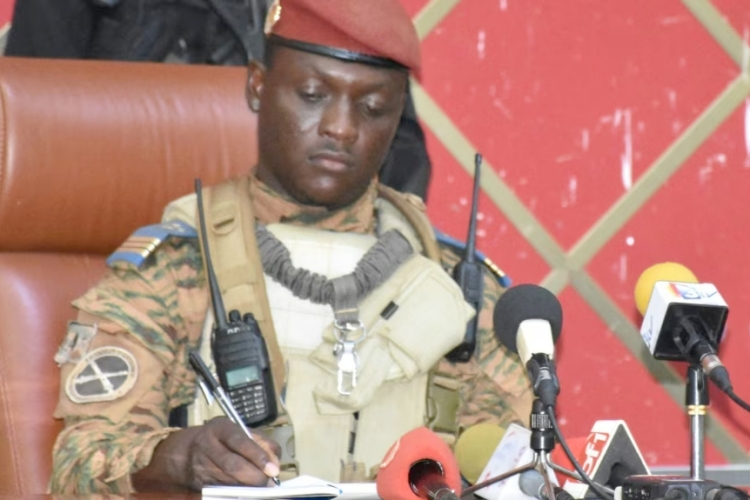
Gambiaj.com – (OUGADOUGOU, Burkina Faso) – Burkina Faso’s military government delivered one of the most dramatic diplomatic ruptures in West African history on Friday evening, announcing the complete severance of diplomatic relations with France, its former colonial power, in a move that has sent shockwaves across the Sahel region and beyond.
The announcement was made on national television by government spokesman Pingdwendé Gilbert Ouédraogo, bringing to a head years of escalating tensions between Ouagadougou and Paris that have steadily poisoned what was once a deeply intertwined bilateral relationship.
A Relationship Beyond Repair
In a formal communiqué, the Burkinabè government declared that “the indispensable conditions for the promotion of relations based on mutual respect, reciprocal trust, and the principle of non-interference” no longer exist in its institutional relations with Paris.
The government did not mince words in its accusations. Burkina Faso accused France of “incessant activism against the interests of Faso,” and of harboring what it described as “neocolonial” and “imperialist” ambitions. Going even further, Ouagadougou alleged that Paris had been lending support to “subversive networks” and, in a strikingly grave accusation, to “terrorists who are plunging the Sahel into mourning.”
The government also claimed that France had been actively working to turn Burkina Faso into “a pariah of the international community.”
Despite the severity of the decision, the Burkinabè government was careful to draw a distinction between state and society. The communiqué stressed that the diplomatic break “exclusively targets relations at the diplomatic level” and “does not call into question the historical bonds between the two peoples,” an acknowledgement of the deep cultural, linguistic, and human ties forged over generations between the two nations.
Paris Hits Back, Warning of Reciprocal Measures
France did not take long to respond. The French Ministry of Foreign Affairs issued a statement later on Friday evening, saying Paris “regrets” what it called a “hostile and unfounded decision” by Burkina Faso’s military regime.
The Quai d’Orsay, France’s foreign ministry, described the move as a “unilateral decision” that “illustrates the worrying drift of the Burkinabè authorities” and warned that “the necessary reciprocal measures are under examination,” language that signals France is preparing its own retaliatory diplomatic actions.
France also said it was paying particular attention to “the security of state personnel” and “French nationals” currently present in Burkina Faso, reflecting heightened concerns about the safety of its citizens on the ground amid the uncertainty triggered by such an abrupt diplomatic break.
A Deterioration Years in the Making
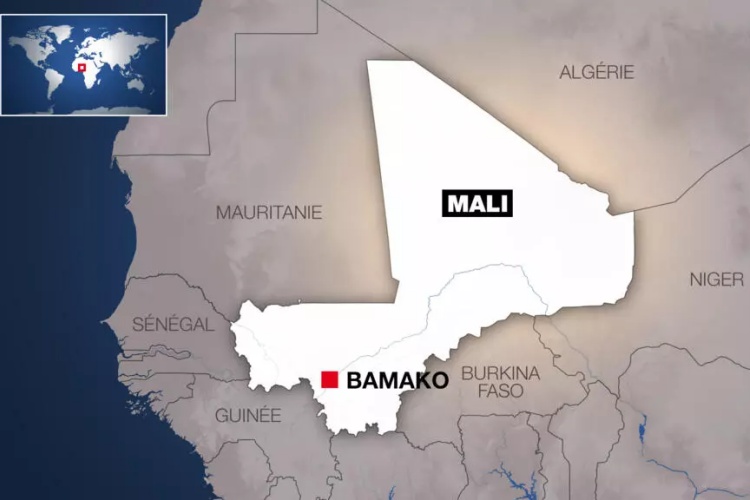
Friday’s announcement did not come without warning. Relations between the two countries have been on a downward spiral since Burkina Faso fell under military rule following successive coups in 2022, as the country’s junta adopted an increasingly assertive and anti-French posture similar to that seen in neighboring Mali and Niger, two other Sahel nations that have expelled French forces and ambassadors in recent years.
Burkina Faso had as far back as 2023 demanded the departure of the French ambassador and subsequently refused to grant accreditation to any replacement diplomat, effectively leaving the French Embassy operating in a diplomatic vacuum long before Friday’s formal declaration. The announcement now opens the door to the rapid suspension of all remaining diplomatic activity between the two countries.
A Shifting Sahel and a Fracturing Francafrique
The break comes at a moment of profound geopolitical transformation in West Africa. France has watched its once-dominant influence in the Sahel erode dramatically over the past three years, as a new generation of military governments, many of them looking eastward to Russia and other partners, have pushed back against what they characterise as decades of French political and economic domination.
Burkina Faso’s decision to formally sever ties is the latest and perhaps most symbolic blow to what analysts have long called Françafrique, the informal network of political, military, and economic ties through which France has maintained post-colonial influence across the continent.
With Burkina Faso now joining Mali and Niger in breaking from France, the old architecture of French influence in the Sahel appears to be collapsing entirely.
Whether this marks a permanent rupture or opens the way for eventual renegotiation of terms remains to be seen. What is clear, however, is that France and Burkina Faso now enter uncharted territory, and the consequences for diplomacy, security, and the millions of civilians caught in the crossfire of the Sahel’s ongoing jihadist insurgency could be profound.






Leave a Reply