


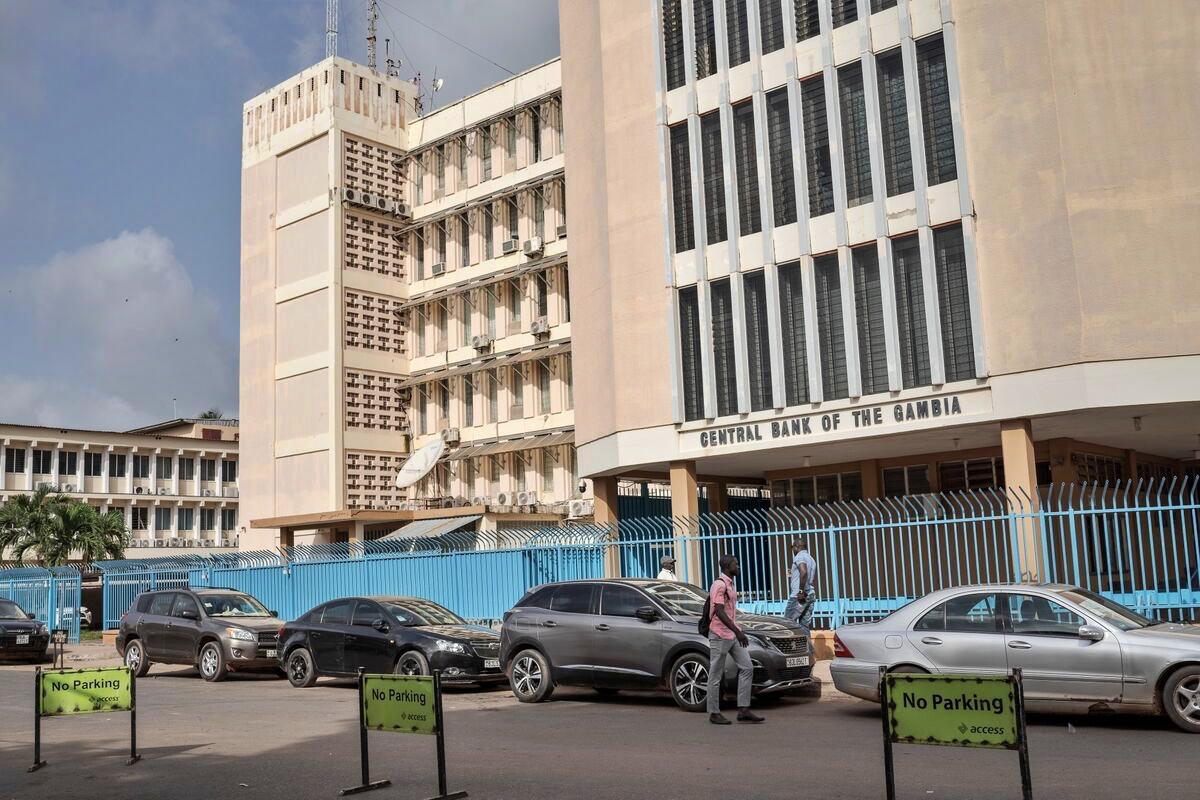
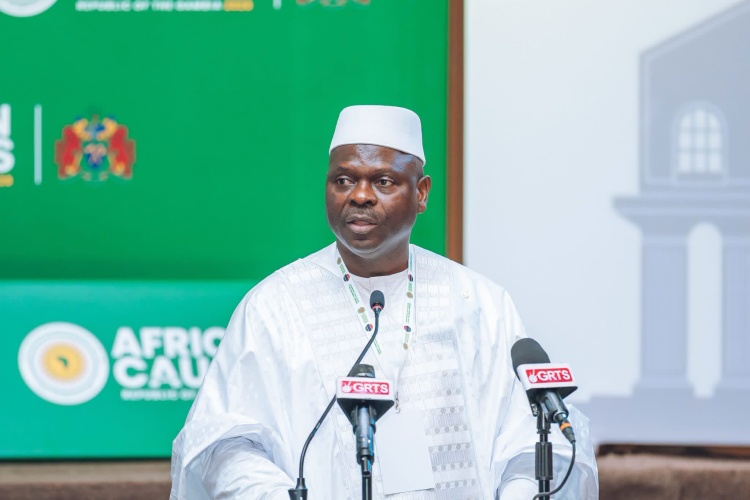
Gambiaj.com – (BANJUL, The Gambia) – The Governor of the Central Bank of The Gambia, Buah Saidy, has warned that rising government borrowing could intensify inflationary pressures and crowd out private-sector investment as the country’s domestic public debt continues to increase.
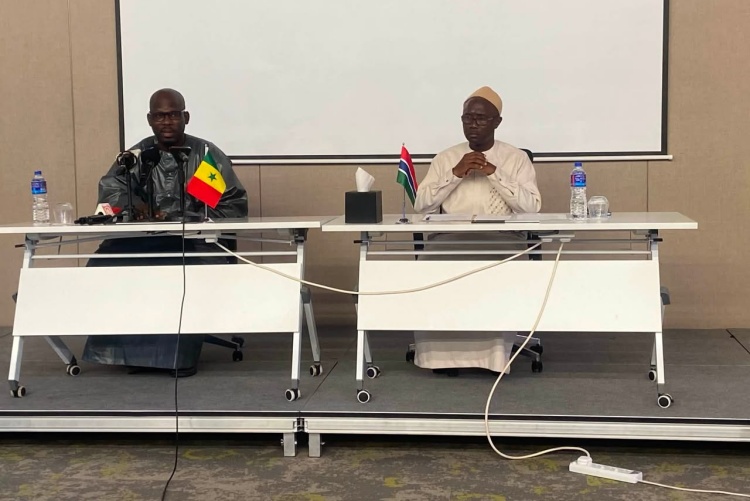
Speaking at a recent Monetary Policy Committee briefing, Mr. Saidy said the Central Bank was concerned about the effect of increased government borrowing and spending on aggregate demand and, ultimately, consumer prices.
“This is a concern to the central bank because it crowds out private sector investment,” Saidy said. “What makes it a concern to the central bank is its implication on, or its effect on, inflation.”
Domestic debt rises.
The government’s domestic debt stock rose to D55.43 billion at the end of June 2026, equivalent to 24.4 percent of gross domestic product, from D51.99 billion at the end of 2025.
The increase was largely driven by greater issuance of government securities. Short-term instruments accounted for 56.2 percent of the domestic debt portfolio at the end of June, compared with 53.8 percent at the end of last year.
The heavier reliance on short-term borrowing leaves the government exposed to continued refinancing and rollover risks.
Mr. Saidy said the implications extend beyond the government’s balance sheet because borrowed funds are eventually spent in the economy, increasing overall demand.
“If a government borrows and spends, it has an impact on aggregate demand, and as a result it influences domestic price inflation,” he said.
He said the Central Bank, in its role as fiscal adviser to the government, wanted to make clear that the increase in domestic debt carries broader economic consequences.
Borrowing linked to delayed budget support
The governor explained that much of the government’s short-term domestic borrowing is used to bridge funding gaps while the authorities await budget support from international development partners.
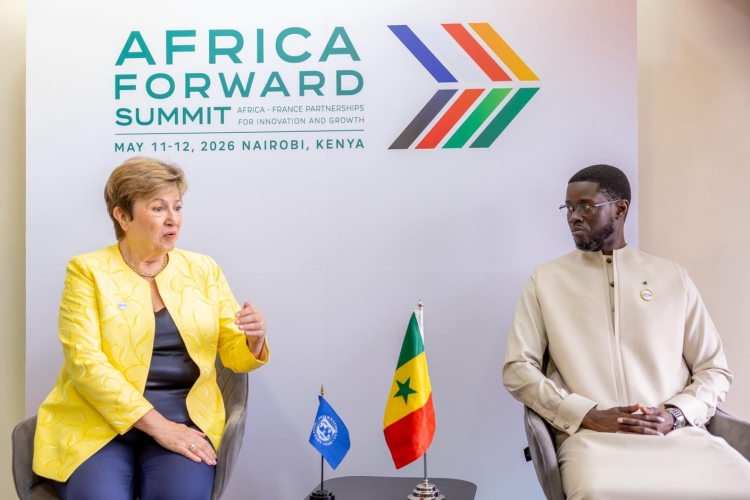
He said disbursements from the International Monetary Fund, World Bank, European Union, and African Development Bank, as well as bilateral partners, are often linked to reviews under the IMF’s Extended Credit Facility programme.
When a quarterly IMF review is delayed or has not been approved by the IMF Executive Board, the corresponding funds are not released. Budget support from other development partners tied to the IMF programme can consequently be delayed.
This creates a financing challenge because much of the external budget support tends to arrive towards the end of the year, while the government has to finance public services throughout the year.
“In between, the government would borrow in the interbank market to finance its operation,” Saidy said, describing the borrowing as a way to “smoothen their consumption.”
Once budget-support funds arrive, he said, the government repays some of its domestic borrowing while the Central Bank intensifies its open-market operations.
Mr. Saidy acknowledged that fiscal deficits and government borrowing are common among developing economies, where governments often rely on a combination of external support and domestic financing to meet expenditure needs.
However, he said efforts were underway to reduce reliance on borrowing and place greater emphasis on financing measures that do not create additional debt.
Central Bank holds the policy rate at 14 percent.
Against this backdrop, the Central Bank has kept its benchmark monetary policy rate unchanged at 14 percent, as policymakers weigh relatively strong domestic economic growth against persistent inflationary pressures and uncertainty in the global economy.
Mr. Saidy said the Monetary Policy Committee decided to maintain the rate after assessing domestic and international economic conditions and the near-term outlook.
Global economic activity is expected to moderate in 2026, he said, with heightened geopolitical tensions weighing on the outlook even as stronger activity in the technology sector provides some support.
Growth in sub-Saharan Africa is projected at 4.3 percent in 2026 and 4.5 percent in 2027. Oil-importing and non-resource-intensive economies, however, remain vulnerable to high food and energy prices, limited policy space, and tighter external financing conditions.
Global progress in reducing inflation has also stalled. Citing IMF projections, Mr. Saidy said headline inflation was expected to reach 4.7 percent in 2026, 0.3 percentage points higher than the Fund’s April forecast, before easing to 3.9 percent in 2027.
He attributed the upward revision to higher energy and food prices linked to the conflict in the Middle East and related supply-chain disruptions.
The Gambian economy remains resilient.
Despite those external pressures, Mr. Saidy said The Gambia’s economy had remained resilient.
Provisional estimates from the Gambia Bureau of Statistics show that real GDP grew by 5.7 percent in 2025, supported by strong activity in tourism, construction, trade, and financial services, as well as private investment and remittance inflows.
The Central Bank’s Composite Index of Economic Activity also indicates that economic activity continued to expand through the second quarter of 2026.
The bank has consequently raised its forecast for real GDP growth in 2026 to 5.8 percent, up 0.1 percentage points from its previous projection.
Mr. Saidy said the improved outlook reflected stronger-than-expected economic activity, supported by continued momentum in services and tourism, ongoing public and private investment, and remittance inflows.
Foreign exchange market remains active.
The foreign exchange market also remained stable and active during the second quarter, helped by improved foreign-currency supplies.
Aggregate purchases and sales of foreign currency increased to $773.7 million during the quarter, up from $644.2 million in the first quarter of 2026, according to the governor.
Demand for foreign currency, nevertheless, remained elevated, partly because of increased payments for imported food, fuel, and construction materials.
The Monetary Policy Committee said it would continue to focus on bringing inflation back towards its target over the medium term while closely monitoring developments in the domestic and global economies.
Mr. Saidy said the committee remained prepared to adjust monetary policy if economic conditions warranted further action.
The next Monetary Policy Committee meeting is scheduled for November 25.






Leave a Reply