


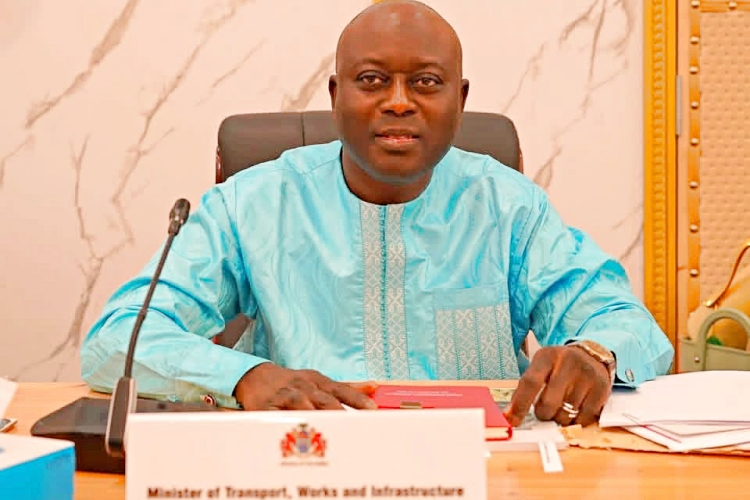
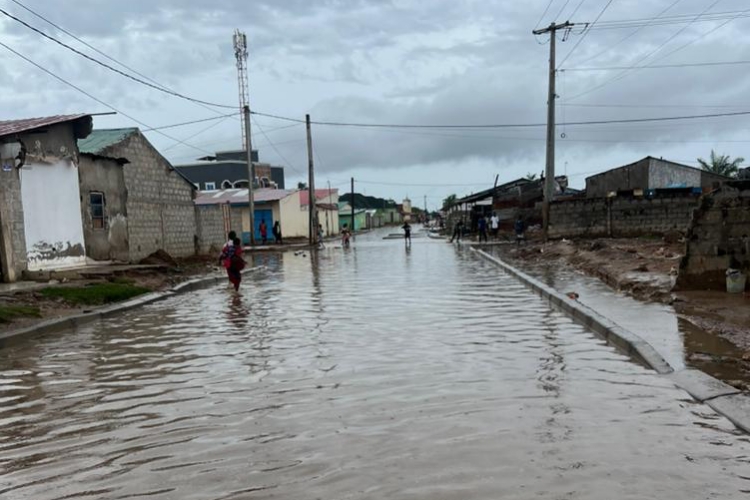
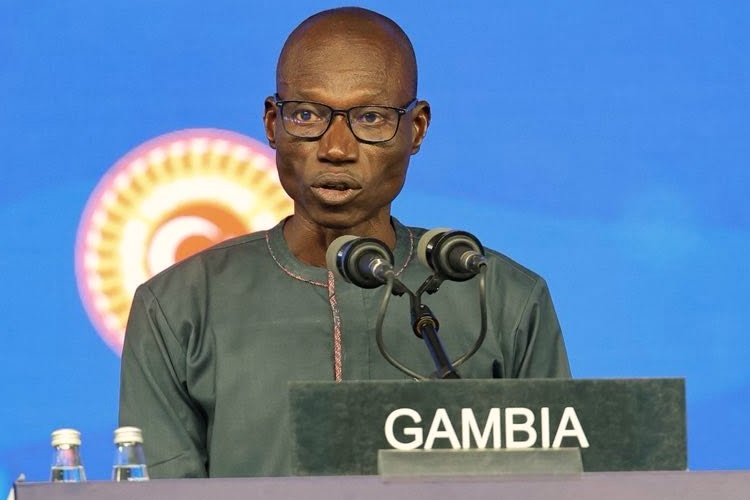
Gambiaj.com – (BANJUL, The Gambia) – The Minister of Transport, Works and Infrastructure, Hon. Ebrima Sillah, has defended the government’s road construction program amid growing public concern over flooding on newly built roads across the Greater Banjul Area following the first rains of the season.
Speaking on West Coast Radio’s Coffee Time with Peter Gomez program, Sillah dismissed claims that the roads were constructed without adequate drainage systems, insisting that all newly built roads include drainage infrastructure designed on the basis of engineering and hydraulic studies.
“All the roads that we have built have drainage. The issue is not the absence of drainage but the wider drainage challenges facing the Greater Banjul Area,” he said.
According to the minister, decades of poor urban planning have resulted in the blockage of natural waterways by settlements, causing rainwater to accumulate and overwhelm existing drainage networks.
“The problem that we have in the Greater Banjul Area is that a lot of waterways have been blocked by settlements because of poor planning,” Sillah explained. “When it rains, water that would normally flow through these channels is redirected onto newly constructed roads.”
He said government studies of the Greater Banjul drainage system have revealed extensive disruptions to natural water channels stretching from the Kanifing Municipality into parts of the West Coast Region and linking to waterways that extend as far as the Casamance region of southern Senegal.
Sillah noted that drainage channels in communities such as Fajara, Bundung, Tallinding, Bakoteh, and Kololi have either been obstructed or have lost much of their effectiveness due to rapid urbanization.
He acknowledged that flooding will remain a recurring challenge unless a substantial portion of the urban road network is upgraded with integrated drainage infrastructure.
“Unless we are able to do a significant percentage of the roads in KMC and the West Coast Region, this problem will continue to occur. We have to admit it,” he said.
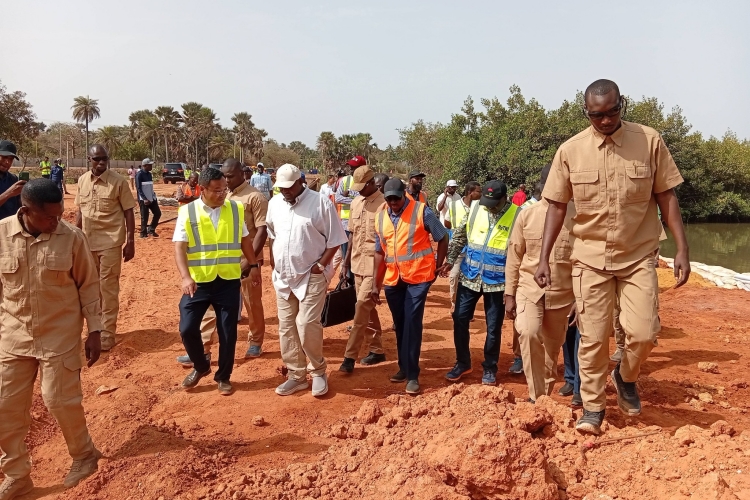
As part of efforts to address the situation, the minister disclosed that the government has identified approximately 135 kilometers of roads within the Kanifing Municipality for development. Detailed studies and designs are expected to commence shortly, with construction anticipated to begin around September or October.
“If we are able to finalize those roads, the level of water concentration that we see on the roads will significantly reduce,” he added.
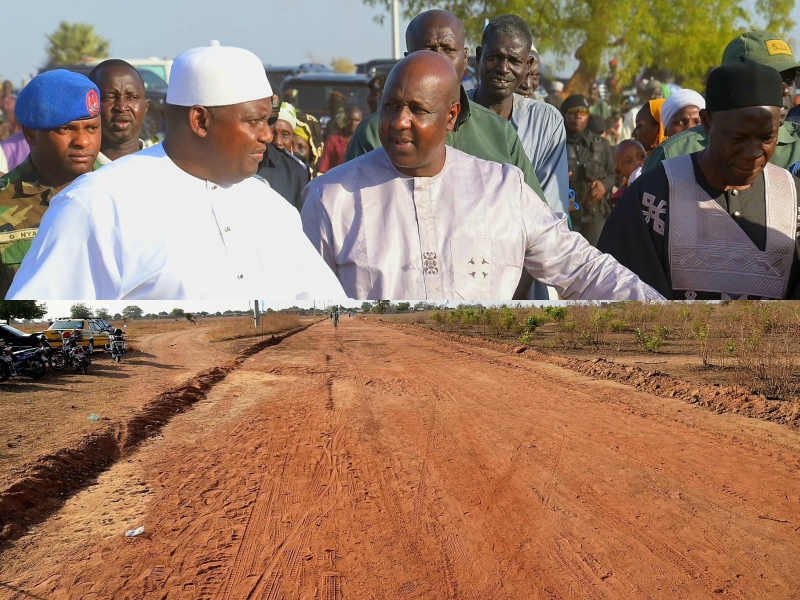
Responding to questions about the Vice President’s annual visits to flood-affected communities, Sillah said such inspections remain necessary due to rapid population growth, inadequate waste management, and the indiscriminate dumping of refuse into drains and waterways.
“The municipal authorities are struggling to collect waste across the Greater Banjul Area, and some residents dump waste into drains and waterways, blocking the flow of water,” he said.
He described annual clean-up exercises as short-term interventions aimed at clearing clogged drainage channels and mitigating the impact of seasonal flooding.
On climate resilience, Sillah said future road projects are being designed with stronger environmental safeguards, including comprehensive environmental impact assessments and drainage systems tailored to local conditions.
He added that government is exploring the use of water retention ponds to temporarily store excess rainwater before gradually releasing it into drainage channels and canals.
The minister also addressed flooding concerns on Brikama’s New Town Road, attributing part of the problem to a design flaw inherited from a previous administration.
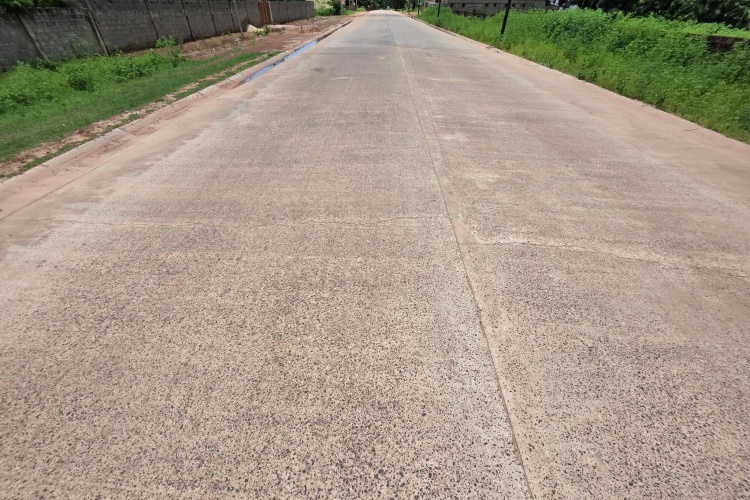
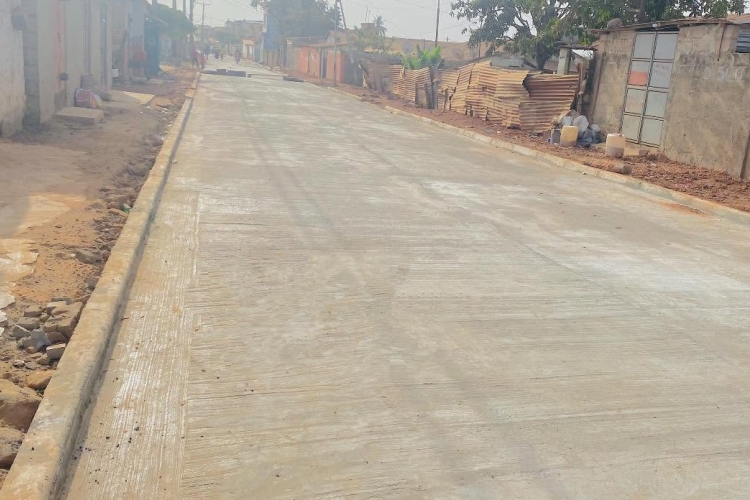
“That was a design fault, but it was done years ago before we came into office,” Sillah said. “We intend to address it with concrete roads, proper drainage, and corrective engineering measures.”
Despite criticism from some members of the public, Sillah maintained that flooding on certain newly constructed roads does not necessarily point to poor workmanship. Instead, he argued, it reflects broader drainage deficiencies and longstanding urban planning challenges that require sustained, long-term solutions.



Leave a Reply