


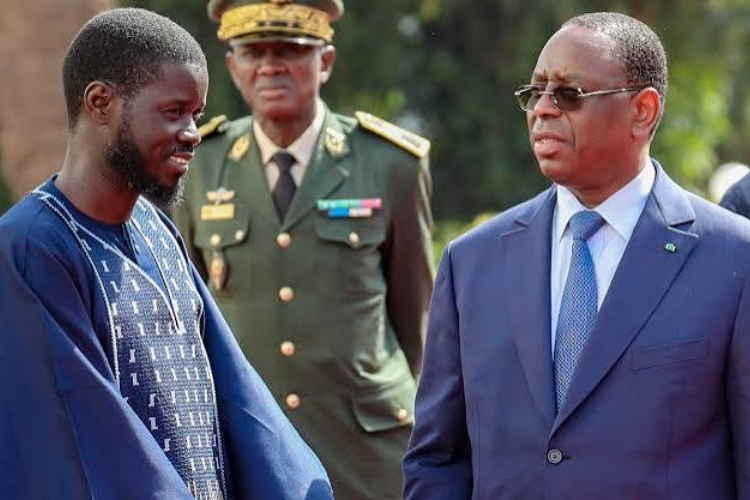
Gambiaj.com – (DAKAR, Senegal) – After months of uncertainty and public distance, Senegalese President Bassirou Diomaye Faye has agreed to meet his predecessor, Macky Sall, in a move that marks a significant political turning point for both men and could reshape Senegal’s position behind Sall’s bid for the post of United Nations Secretary-General.
The meeting, scheduled for Friday at the Presidential Palace on Avenue Roume in Dakar, follows weeks of discreet negotiations involving West African leaders and Senegal’s highest religious authority, the Khalife General of the Mourides, Serigne Mountakha Mbacké.
The decision represents more than a simple diplomatic encounter. It reflects a gradual shift in Diomaye’s position from public reserve to cautious engagement, while giving Macky Sall the political assurance he had reportedly sought before returning to Senegal.
From Uncertainty to Dialogue
Those familiar with the discussions say Macky Sall had been reluctant to return to Dakar without clear guarantees that he and his successor shared a common understanding on the purpose of the visit and that his presence would not destabilize Diomaye’s administration.
The former president has long been regarded as a cautious political strategist who avoids major moves without first securing the necessary conditions. Supporters point to his decision to pursue the UN Secretary-General position only after becoming confident of backing from key members of the UN Security Council.
However, one crucial piece remained missing: President Diomaye’s support.
Diomaye had publicly stated that he learned of Macky Sall’s candidacy through fellow West African leaders rather than from Sall himself, highlighting the absence of direct communication between the two leaders.
That lack of contact became the principal obstacle to both Macky’s return and any prospect of Senegal presenting a united front behind his international candidacy.
Regional Leaders Step In
Recognizing the growing impasse, several regional figures reportedly launched behind-the-scenes efforts to rebuild communication between the two men.
Former Guinea-Bissau president Umaro Sissoco Embaló is said to have played a central coordinating role, reaching out to regional leaders including Côte d’Ivoire’s President Alassane Ouattara and Gambian President Adama Barrow.
Their message reportedly focused less on domestic politics than on Africa’s collective interests.
According to sources familiar with the mediation, the leaders argued that history would judge Senegal harshly if internal political divisions prevented the country from supporting one of its former presidents for the world’s highest diplomatic office at a time when Africa is seeking greater influence within global institutions.
That appeal appears to have become one of the first major inflection points in Diomaye’s thinking, shifting the discussion from personal and political grievances to Senegal’s and Africa’s broader strategic interests.
Religious Mediation Proves Decisive
While regional diplomacy helped soften positions, those involved say the decisive breakthrough came through the intervention of Serigne Mountakha Mbacké.
After repeated appeals from Embaló, the Mouride spiritual leader agreed to personally intervene, urging Diomaye to rise above political disagreements in the interest of Senegal and future generations.
His intervention reportedly carried considerable moral authority, helping persuade the president to accept dialogue despite reservations within parts of his political entourage, where criticism of Macky Sall has remained strong since the change of government.
Observers see this religious mediation as the moment that transformed informal contacts into concrete negotiations.
Strict Conditions for Macky’s Return
Even after agreeing in principle to meet, Diomaye reportedly insisted on strict conditions governing Macky Sall’s visit.
According to sources, the president made it clear that the trip should focus exclusively on discussions concerning Sall’s UN candidacy.
He opposed proposals that would have allowed the former president to visit religious cities or hold activities that could attract large crowds and potentially be interpreted as political rallies organized by Sall’s Alliance for the Republic (APR).
These conditions were reportedly communicated through the Khalife General, who advised Macky Sall to limit his visit to the presidential meeting.
The former president subsequently issued a statement explaining to supporters that his return to Dakar was solely intended to meet President Diomaye and that he would undertake a separate visit later to meet party supporters.
A Political Compromise
Friday’s meeting ultimately reflects concessions from both sides.
Diomaye agreed to receive the man whose legacy his political movement has frequently challenged, while Macky accepted limits that prevented his return from becoming a show of political strength.
The arrangement also carries symbolic significance for Macky Sall. It signals that despite resistance from some figures close to Diomaye—including coalition coordinator Aminata Mimi Touré, one of Sall’s most vocal critics—the former president has succeeded in securing direct engagement with his successor.
Observers say the Khalife General also encouraged both leaders to ensure restraint among their respective supporters, a move that appears to have eased public tensions in recent days.
Beyond Friday’s Meeting
Whether the discussions result in Senegal’s formal endorsement of Macky Sall’s UN bid remains to be seen.
However, the decision to meet already marks an important shift.
For Diomaye Faye, it demonstrates a willingness to separate domestic political rivalry from matters presented as serving Senegal’s international interests.
For Macky Sall, it provides the political legitimacy and institutional recognition that had been missing from his campaign, allowing him to pursue his international ambitions with the prospect of support from his own country’s leadership rather than appearing at odds with it.
The meeting therefore represents not only a reconciliation between two presidents but also an attempt to project national unity at a moment when Senegal seeks to influence one of the world’s most important international appointments.




Leave a Reply