


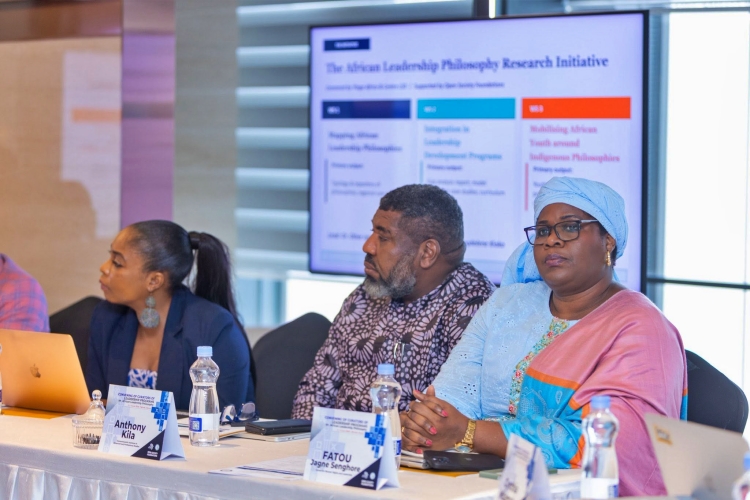
Gambiaj.com – (BANJUL, The Gambia) – The founder of the Centre for Women’s Rights and Leadership, Fatou Jagne Senghore, has joined African governance experts, leadership program curators, and emerging public leaders in a renewed push to anchor leadership development on the continent in indigenous African values and philosophies.
Senghore participated in the Convening of Curators of Leadership Programs on African Leadership Philosophy, organized by Yiaga Africa and the African Centre for Leadership, Strategy and Development with support from the Open Society Foundations.
The gathering was a follow-up to a design workshop held in Lagos last year and focused on exploring how African philosophical traditions such as Ubuntu, Omoluabi, Sankofa, Ujamaa, Oha na Eze, Mutumin Kirki, and Teranga can be integrated into modern leadership development systems.
Participants argued that Africa’s leadership challenges require solutions rooted in the continent’s own historical experiences, cultural values, and collective aspirations rather than imported models that often fail to reflect local realities.
The convening sought to develop leadership programs and frameworks that are ethically grounded, culturally rooted, and globally relevant.
Delegates maintained that the future of leadership in Africa must emerge from African values and perspectives at a time when governance systems across the continent face increasing pressure from social, economic, and political challenges.
Discussions highlighted concerns about what participants described as a growing crisis of leadership characterized by transactional politics, weak public trust, and the failure of governance systems to adequately respond to the demands of Africa’s youthful population.
Speaking during the forum, Dr. Otive Igbuzor stressed the need for leaders who embody the principles of African philosophy, particularly collectivism and service to the community.
“Africa needs leaders who imbibe the values of African philosophy, such as collectivism,” he said.
Samson Itodo echoed the call for a leadership model grounded in the continent’s heritage.
“Africa needs Ubuntu leaders rooted in its own history, values, and experiences,” he said.
A key lesson emerging from the discussions was that leadership development cannot be separated from cultural identity.
Participants argued that sustainable governance reforms require leaders who understand and practice values such as solidarity, accountability, empathy, community responsibility, and respect for human dignity.
The forum also underscored the importance of investing in young leaders and creatives as agents of change. Following the two-day curators’ convening, emerging African creatives and young public leaders gathered for a reflection on how indigenous values can be reclaimed and embedded in creative expression and public leadership.
Organizers said the interaction between leadership program curators and emerging leaders would help strengthen future initiatives by fostering intergenerational learning, mentorship, and collaboration.
The convening concluded with participants expressing commitment to advancing a new vision of African leadership that draws strength from indigenous philosophies while equipping leaders to respond to contemporary global challenges.
Observers say the initiative offers an important lesson for policymakers and institutions across Africa: that effective leadership may depend not only on technical competence but also on reconnecting governance with the ethical and cultural values that have long shaped African societies.












Leave a Reply