


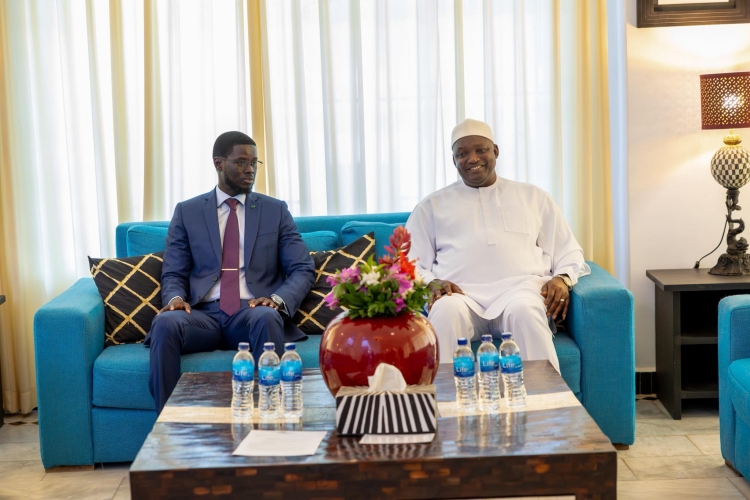
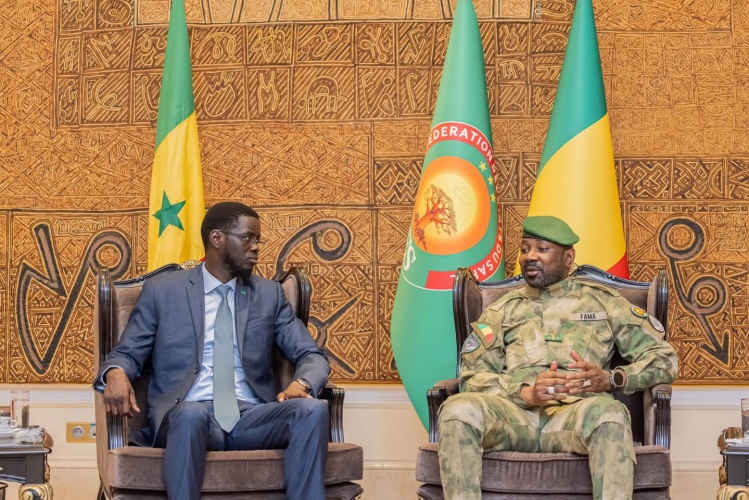
Gambiaj.com – (BANJUL, The Gambia) – Senegalese President Bassirou Diomaye Faye paid a working visit to Banjul on Saturday, May 30, where he was received by President Adama Barrow for high-level bilateral talks aimed at deepening cooperation between Senegal and The Gambia across a range of strategic sectors.
The visit, which drew considerable attention given the weight of the issues on the table, concluded without an official communiqué or the customary joint press conference, a conspicuous departure from diplomatic convention that left both the press and the wider public largely in the dark about the substance of the discussions.
However, The Gambia Journal has independently learned from credible and concordant official sources within both countries that the two heads of state engaged in wide-ranging and substantive deliberations covering security, transportation, energy, and trade — sectors that sit at the heart of the two countries’ shared interests and collective future.
A Diplomatic Ask: Senegal Eyes the ECOWAS Commission Presidency
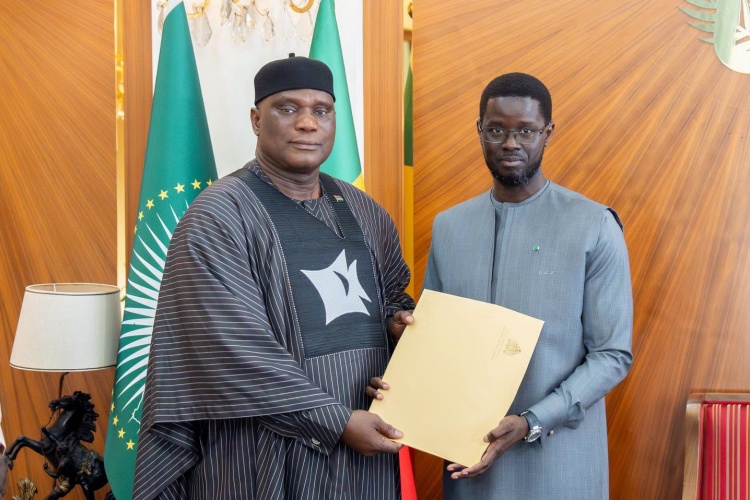
Among the most consequential matters raised during the visit was a diplomatic overture from President Diomaye Faye, who formally informed his Gambian counterpart of Senegal’s intention to put forward a candidate for the presidency of the Economic Community of West African States (ECOWAS) Commission — and sought President Barrow’s support.
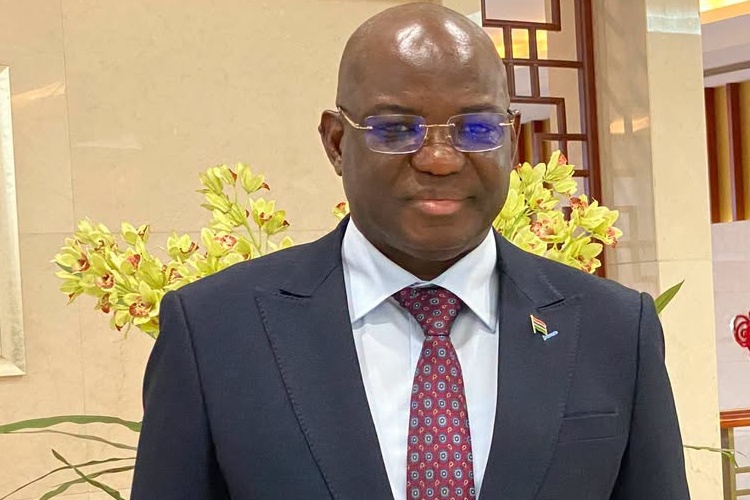
Senegal’s candidate is General Birame Diop, a retired senior air force officer, whose candidacy is expected to be submitted to ECOWAS heads of state and government at the bloc’s next summit scheduled for July 2026.
The candidacy carries particular diplomatic sensitivity given that the outgoing ECOWAS Commission President is none other than Gambia’s own Dr. Omar Alieu Touray, whose term has come to an end. Whether Banjul will back a Senegalese successor — or explore a candidate of its own — remains an open question that Saturday’s talks were likely intended, at least in part, to begin answering.
Transborder Security: Shared Threats, Common Mechanisms
With West Africa continuing to grapple with the southward creep of jihadist insurgencies, the proliferation of armed groups, and the fracturing of the regional security architecture, border security featured prominently in the bilateral agenda.
The two presidents underscored the urgency of reinforcing cross-border security cooperation, agreeing on the need to build on existing bilateral security frameworks to more effectively address the evolving threats confronting both nations.
The Gambia, a small country entirely encircled by Senegal except for its Atlantic coastline, shares not only a border with its neighbour but also a deeply intertwined security landscape — making close coordination not merely beneficial, but indispensable.
Energy and Trade: Diomaye Reaffirms Support for Barrow
In a region where energy poverty continues to constrain economic growth and human development, the energy sector also featured as a priority discussion area.
Senegal, which has in recent years made significant strides following the discovery and development of offshore oil and gas reserves, is increasingly positioning itself as a potential energy partner for its neighbours.
President Diomaye Faye reaffirmed Senegal’s solidarity with The Gambia in the domains of energy and trade, a pledge that, if translated into concrete agreements, could have far-reaching implications for Gambians grappling with persistent electricity challenges and for businesses seeking deeper regional market integration.
Brothers Beyond Borders
The talks also touched on the broader international landscape, marked by intensifying geopolitical tensions in Europe and the Middle East whose ripple effects are increasingly being felt across the African continent.
Both leaders agreed on the necessity of greater African coordination and solidarity in the face of global disruptions, a shared outlook that reflects the two countries’ long tradition of walking in step on matters of continental concern.
Indeed, the relationship between Dakar and Banjul has never been merely one of geographical proximity. It is rooted in a profound historical, human, and cultural bond, woven together by ties of kinship, language, and solidarity that transcend the colonial borders that once carved up the Senegambian world.
Saturday’s working visit, substantive in content if restrained in its public presentation, was the latest chapter in that enduring story.
The Gambia Journal will continue to follow developments from this visit, including any outcomes from the forthcoming ECOWAS summit in July.


Leave a Reply