


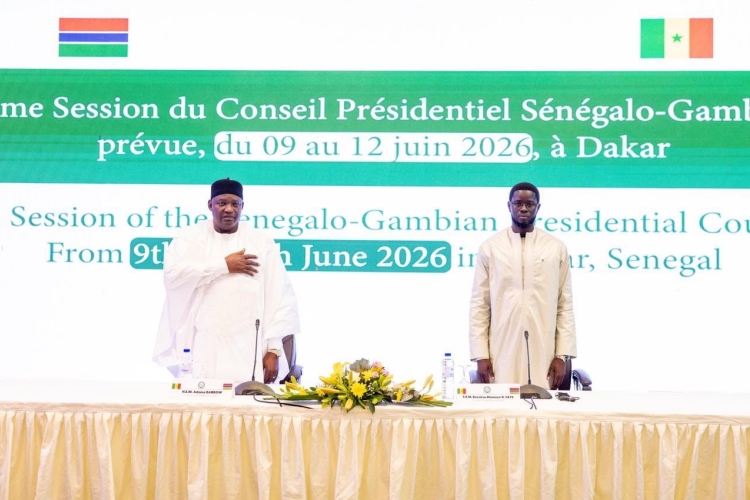
Gambiaj.com – (DAKAR, Senegal) – President Adama Barrow of The Gambia and his Senegalese counterpart, President Bassirou Diomaye Faye, have co-presided over the conclusion of the fourth session of the Senegalo-Gambian Presidential Council in Dakar, cementing a renewed and expanded framework of bilateral cooperation through the signing of twelve agreements and roadmaps that will shape relations between the two countries for years to come.
The fourth session of the Senegalo-Gambian Presidential Council, the highest bilateral forum between the two nations, wrapped up in the Senegalese capital on Friday with a bold package of agreements spanning defense, energy, trade, the digital economy, youth, culture, the environment, and cross-border cooperation.
The landmark session, which ran from June 9 to 12, was preceded by two days of technical expert meetings and a ministerial-level conference held on June 9 and 10, during which officials from both countries reviewed progress on commitments made at previous sessions and identified fresh priorities for cooperation.
It is the first time the Council has convened under President Faye, who took office in Senegal in March 2024.
Twelve Agreements Across Strategic Domains
The centerpiece of the session was the signing of twelve accords and roadmaps covering an expansive range of sectors: defense and security, the economy and commerce, energy and hydrocarbons, the digital economy, youth, culture, the environment, and cross-border cooperation.
While officials did not publicly release the full texts of the individual documents, the scope of the agreements signals a significant deepening of the Senegambia partnership beyond the diplomatic and infrastructural milestones achieved in earlier sessions.
On the security front, the two presidents underscored the urgency of intensifying cooperation between their respective defense and security forces to confront what they described as shared transnational threats, including organized crime, illicit trafficking, violent extremism, and broader threats to sub-regional stability.
The inclusion of security among the signed agreements suggests the two countries are moving toward more formalized and operational joint mechanisms.
In the energy sector, the session built on progress already made, most notably the existing electricity interconnection between Senegal’s national utility SENELEC and The Gambia’s NAWEC.
The new energy and hydrocarbons accord is expected to deepen this cooperation at a time when both countries are navigating the opportunities and challenges presented by West Africa’s growing oil and gas economy.
Infrastructure and Connectivity at the Core
Both leaders reaffirmed their commitment to accelerating a suite of structural projects designed to physically and economically bind the two nations more tightly.
Among the flagship projects referenced was the Sambangalou Dam, a long-anticipated hydroelectric project on the Gambia River, as well as the ongoing demarcation of the shared border, which remains a critical step toward formalizing cross-border movement and commerce.
The Senegambia Bridge, which has already transformed the movement of people and goods between the north and south banks of Gambia and into Senegal, was cited as a symbol of what the bilateral partnership can achieve.
Both presidents expressed determination to build on such milestones by facilitating the free flow of persons and goods and promoting deeper economic integration.
Progress was also noted in agriculture, fisheries, transport, tourism, health, education, and judicial cooperation, all sectors that directly affect the daily lives of ordinary Gambians and Senegalese.
A Shared People, Two Sovereign States
The political atmosphere of the session was notably warm and philosophically grounded, with both heads of state invoking the idea of Senegambia as a civilizational and cultural reality that predates the existence of their modern states.
“The Gambia and Senegal are not two neighboring nations. We are one people, whom history has distributed between two states, and whom no border can divide,” President Faye said in remarks following the close of the session, addressing President Barrow as “my brother.”
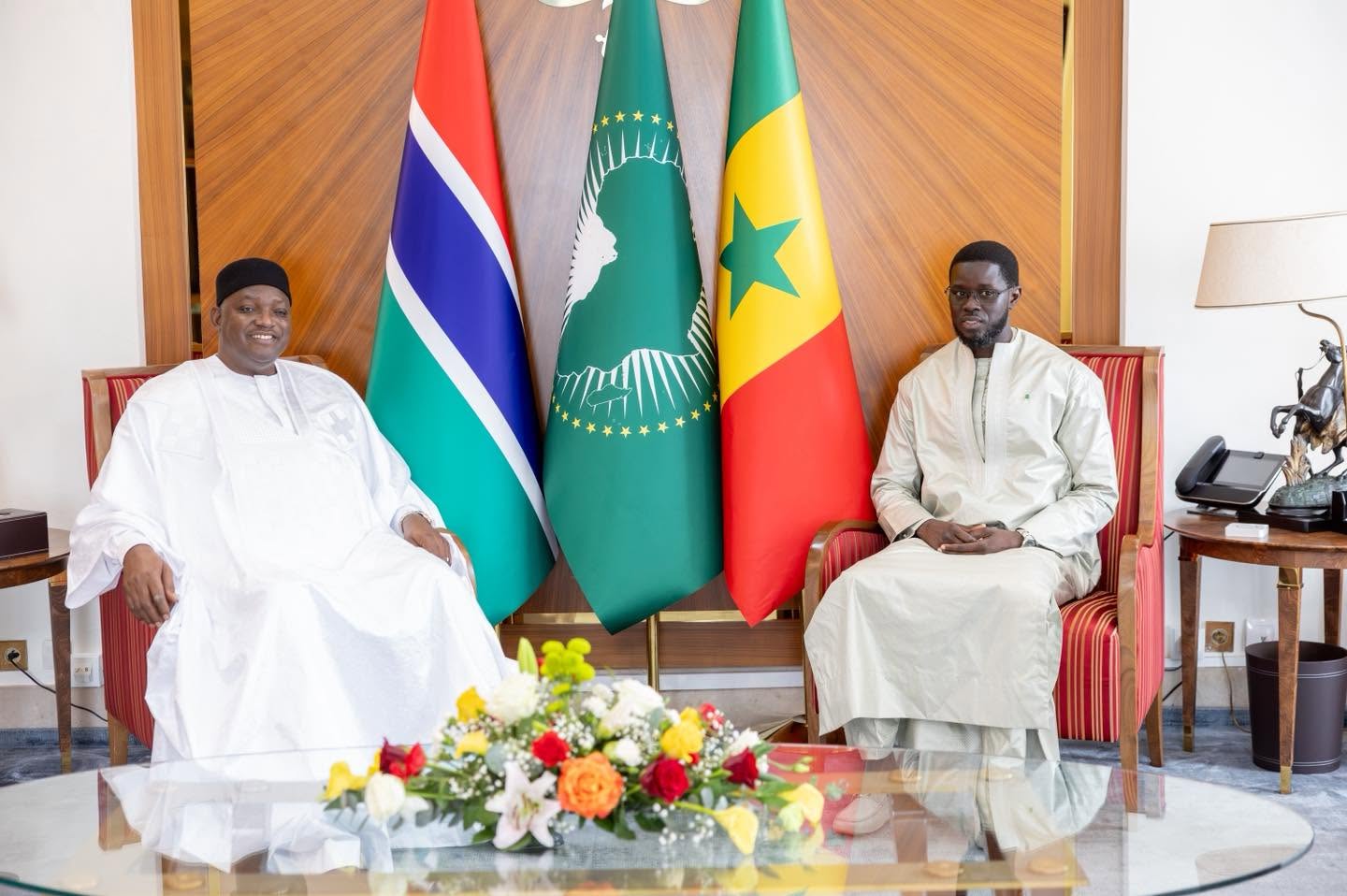
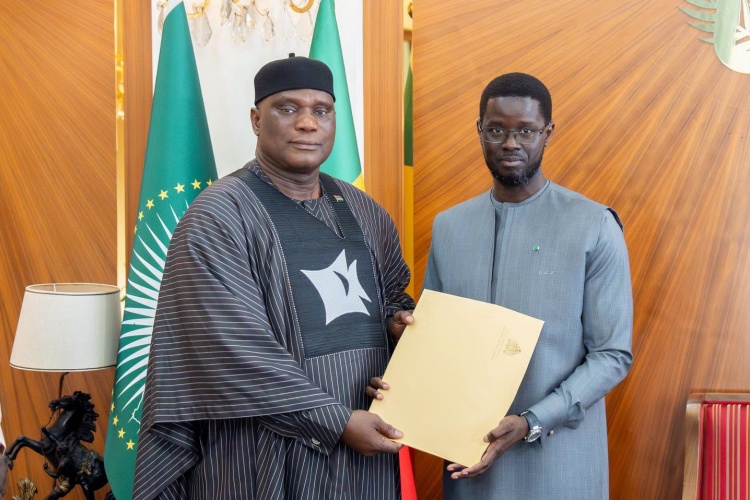
Gambian President Adama Barrow and his Senegalese Counterpart Bassirou Diomaye Faye at the fourth session of the Senegalo-Gambian Presidential Council in Dakar, 12 June, 2026
He expressed gratitude for what he described as the fraternity that guided their deliberations and the agreements signed on the day.
The Senegalese presidency, in a statement from the State House, described the border between the two countries not as a line of separation but as “a hyphen,” a bond rather than a barrier, and said both presidents had chosen to build a shared destiny together.
Eight Years of Building an Institution
The fourth session brought together senior officials and technical experts from both countries to review progress made since the third session, which was held in Banjul in August 2023.
The Senegalo-Gambian Presidential Council was established following President Barrow’s first official visit to Dakar in March 2017, making this year’s session a milestone in an institution now nearly a decade old.
As the supreme body for bilateral cooperation between the two countries, the Presidential Council provides a key strategic framework for strengthening relations between the two sister nations, offering a vital platform for dialogue on issues of common interest and for promoting regional integration, peace, security, and development in priority sectors.
Both presidents instructed the relevant ministries and technical structures of their respective governments to take all necessary measures to implement the adopted recommendations with urgency and diligence.
Senegal’s Ministry of African Integration and Foreign Affairs, which issued the official communiqué, described the spirit of the session as one rooted in “brotherhood, mutual trust, solidarity, and a shared vision of regional integration.”
For Gambians, the breadth of the agreements reached in Dakar, from border demarcation to the digital economy, from energy to youth, represents a potentially transformative moment in The Gambia’s most consequential bilateral relationship. The real test, as with all previous sessions, will lie in how swiftly and faithfully those commitments are translated into action on the ground.


Leave a Reply